Myths and Truths about Vitamin C Use on the Skin
Vitamin C is one of the most recognized and effective ingredients in the world of skincare. With its countless benefits, it is an indispensable ally for those seeking healthier, more luminous, and even-toned skin. However, despite its popularity, there is a lot of conflicting information about its use, and not all of it is accurate. On the Dermagius blog, we demystify the main myths and truths so you can get the most out of this powerful antioxidant.
Myth: Vitamin C stains the skin when exposed to the sun
Truth: When used correctly, vitamin C does not stain the skin. In fact, it is an antioxidant that protects against damage caused by free radicals generated by sun exposure. However, it is essential to complement the use of vitamin C with a good sunscreen, maximizing its benefits and further protecting the skin.
Myth: All types of vitamin C are equally effective
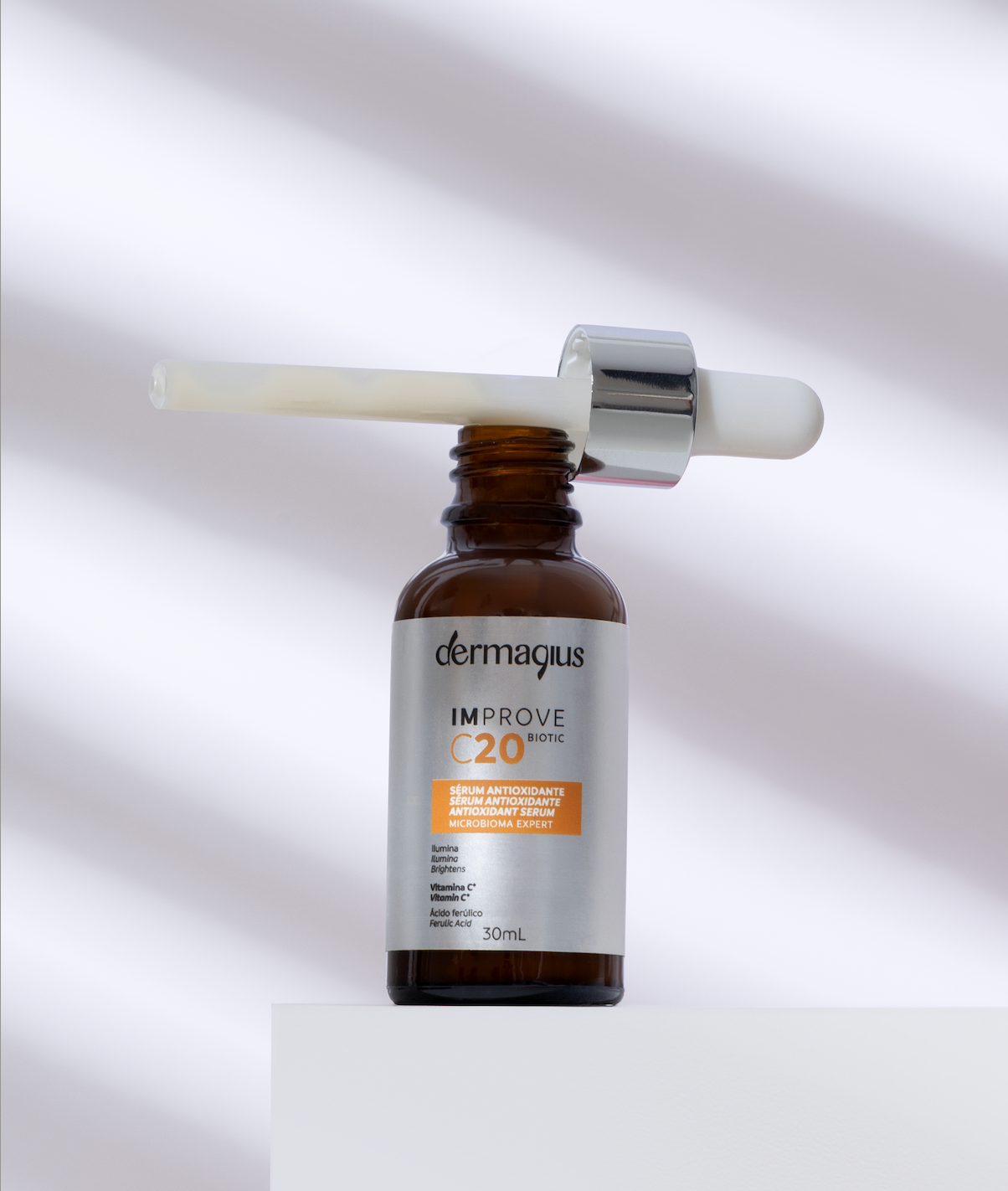
Truth: There are different forms of vitamin C, but not all of them have the same effectiveness. L-ascorbic acid is the purest and most potent form, but it is also quite unstable. Products like Dermagius' Improve C 20, formulated with 20% L-ascorbic acid, ensure maximum antioxidant and brightening efficacy, preserving the active ingredient's stability and ensuring visible results.
Myth: Vitamin C only serves to brighten the skin
Truth: While widely known for its brightening properties, vitamin C offers many other benefits. It stimulates collagen production, improves skin texture, increases firmness, and protects against damage caused by free radicals. Additionally, its anti-inflammatory properties help soothe irritations and reduce redness.
Myth: Vitamin C can be used with any ingredient
Truth: Vitamin C is compatible with many ingredients, but some combinations should be avoided. For example, combining it with highly exfoliating acids, such as glycolic acid, can cause irritation in more sensitive skin.
Myth: Vitamin C irritates all skin types
Truth: Skin's reaction to vitamin C can vary depending on its concentration and skin type. For sensitive skin, it is recommended to start with lower concentrations.
Myth: Using vitamin C at night offers no benefits
Truth: Vitamin C can be used both in the morning and at night. In the morning, it protects the skin from damage caused by free radicals and pollution. At night, it promotes cell renewal and helps repair damage accumulated during the day. Incorporating vitamin C into your nighttime routine maximizes its antioxidant and regenerating effects.